

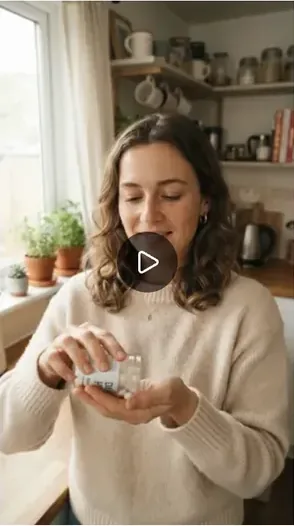
Start the next one while it works.
Runs happen on our servers. Close the tab and they keep going.
PactBoost’s agent does the production. It stops for your decisions and remembers what you approve.
Invite only. No card.
Days
The usual way: brief, shoot, edit, notes.
Hours
Your first ads. It keeps what you approve.
Minutes
Every ad after. It starts from what worked.
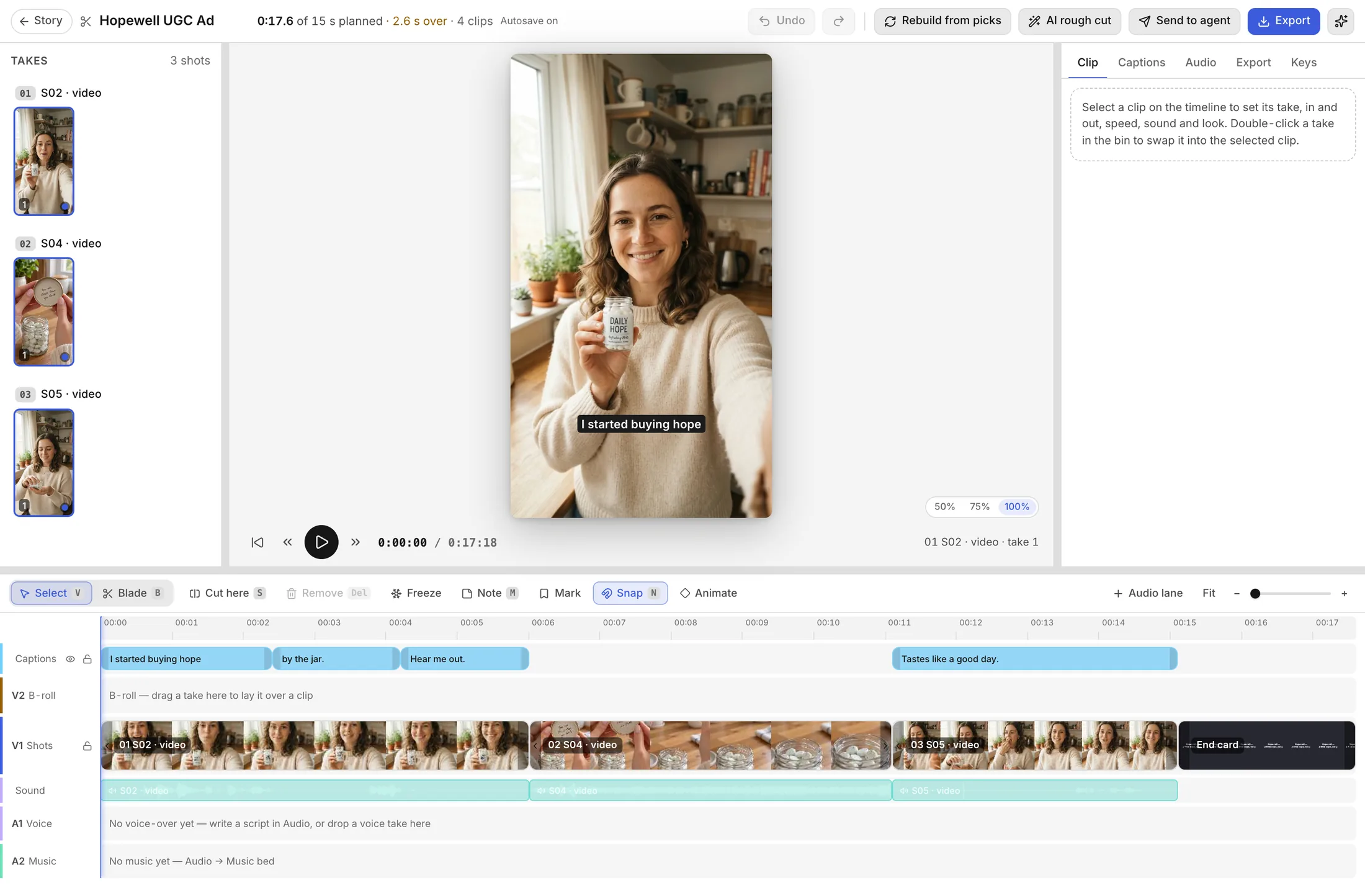
Measured once: one message, a finished 17.6-second ad, about seven minutes. Rough mode, a made-up brand.
Speed
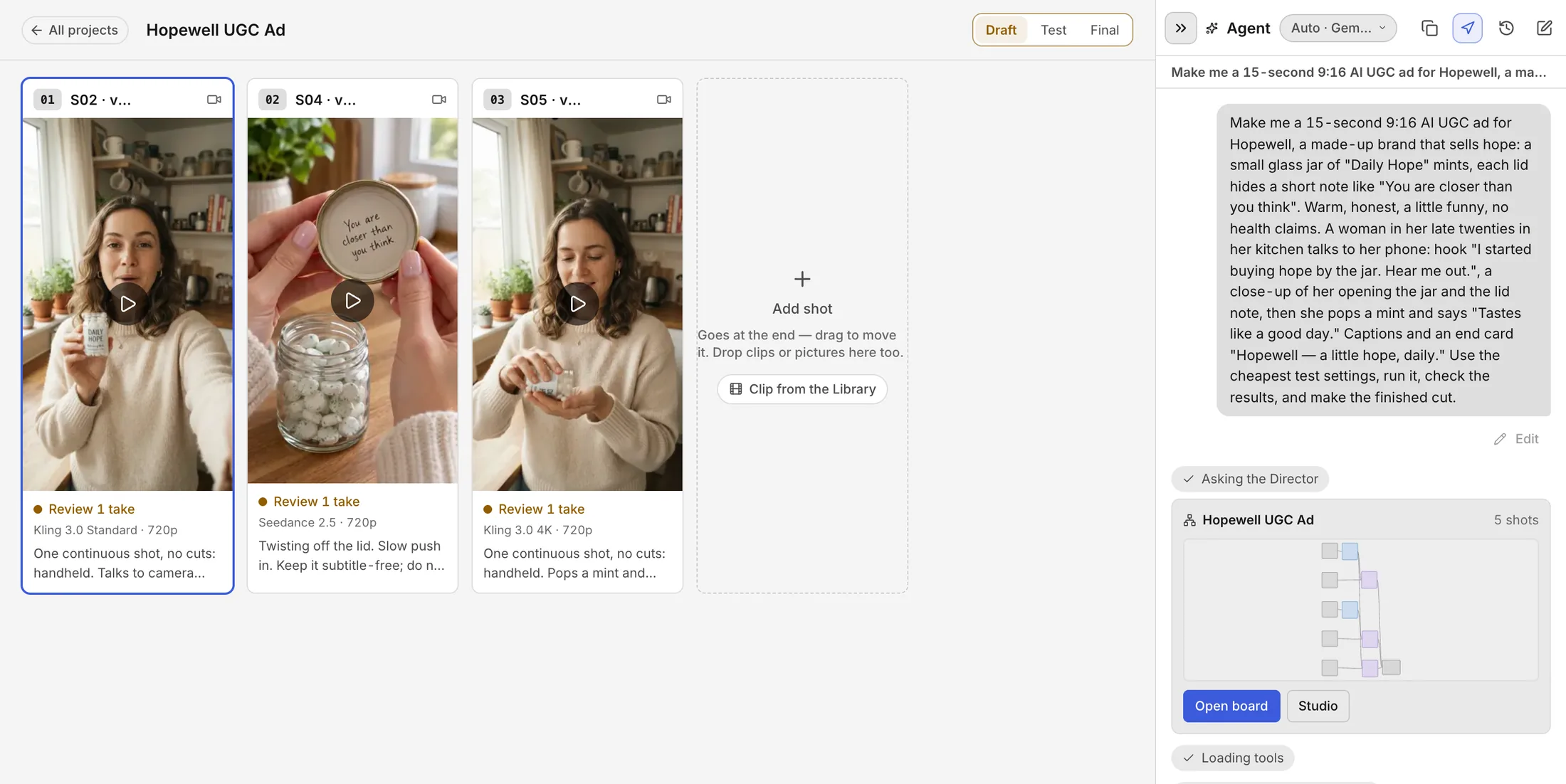
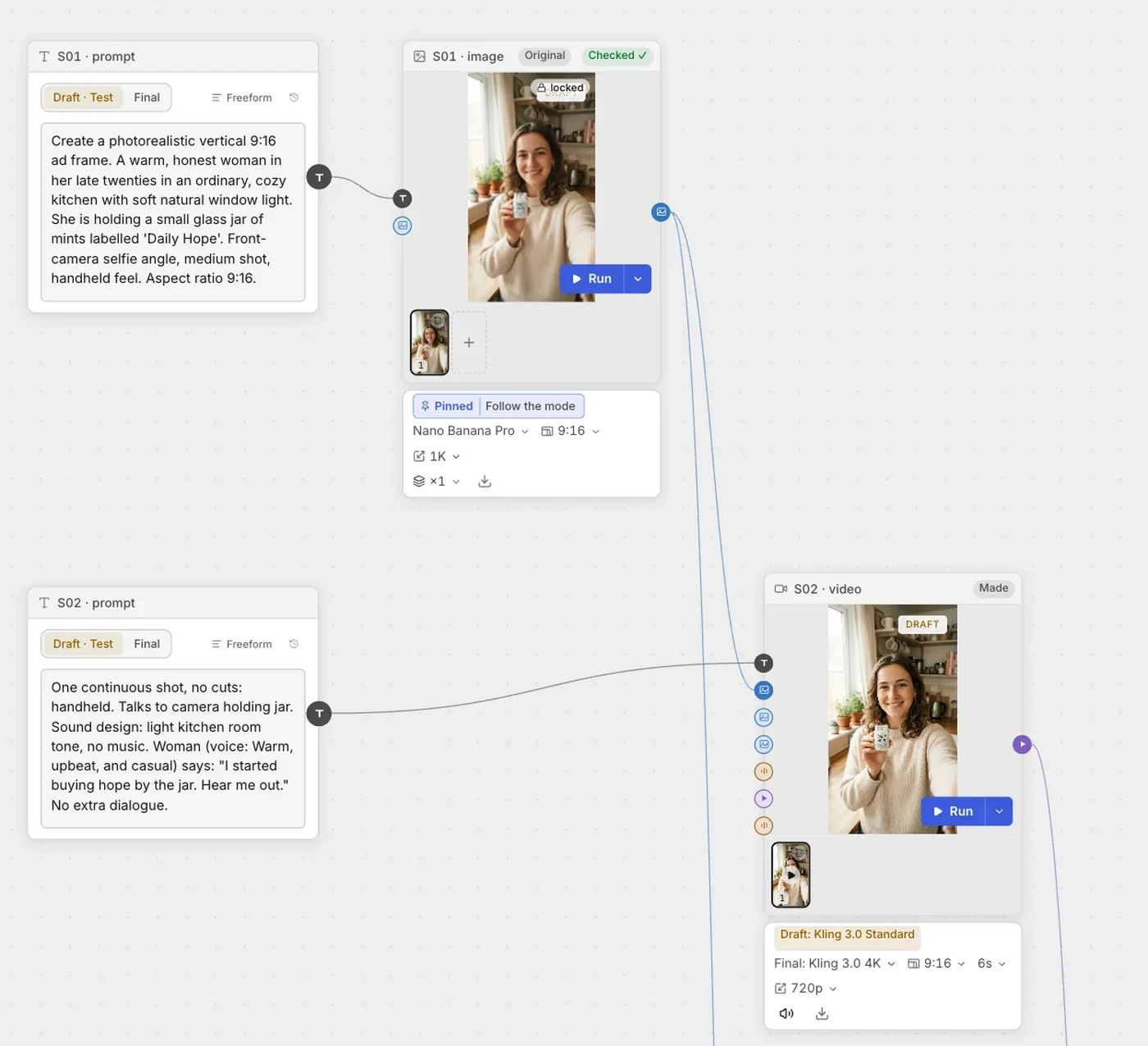
One message starts an ad. The agent plans it, prices it, makes it after your Go and cuts it. You start the next one while it works.
1
Write it the way you’d tell a producer. It plans every shot.
2
Nothing is spent until you do.
3
Note any shot. The next take follows it.
Runs happen on our servers. Close the tab and they keep going.
Two runs at a time per person on Quality. Five on Volume. The rest wait their turn.
“4 of 4 ready.” Come back to finished work, not a spinner.
Memory
PactBoost holds your brand’s look, rules, cast and winning formats for the whole team. Nobody teaches it twice. Open the project, or say what you’re working on, and it already knows.
Locks, facts and lessons go into every prompt for that brand.
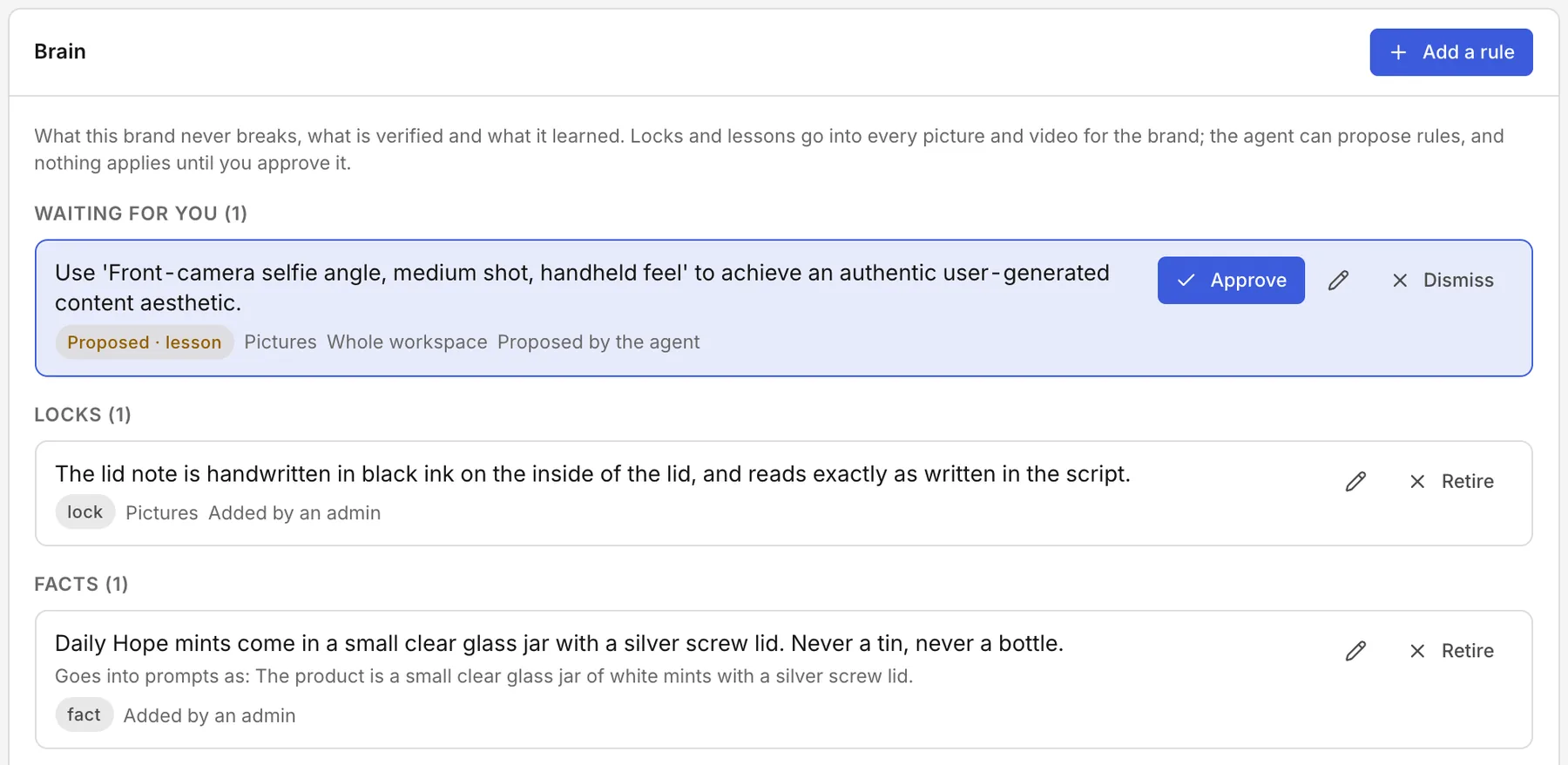
Type @dailyhope and its picture comes with every shot.
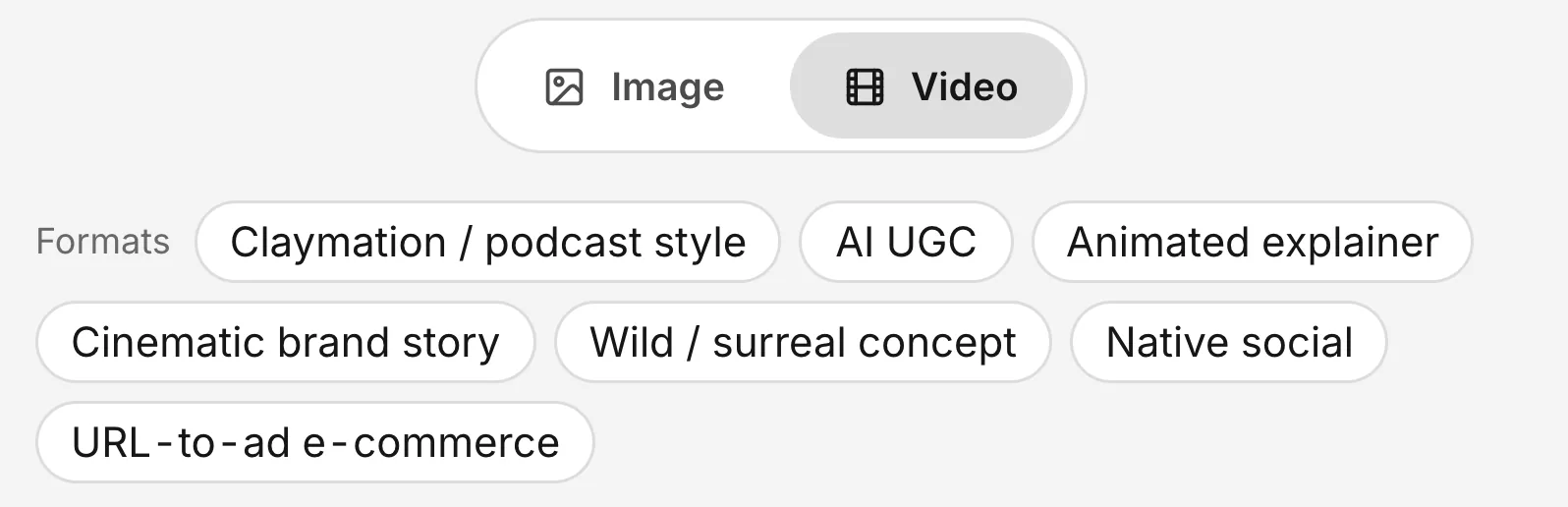
Save an ad that worked as a format. The next one starts from it.
When a project is signed off, it suggests what to remember. A team leader approves it. Nothing becomes a rule without that yes.
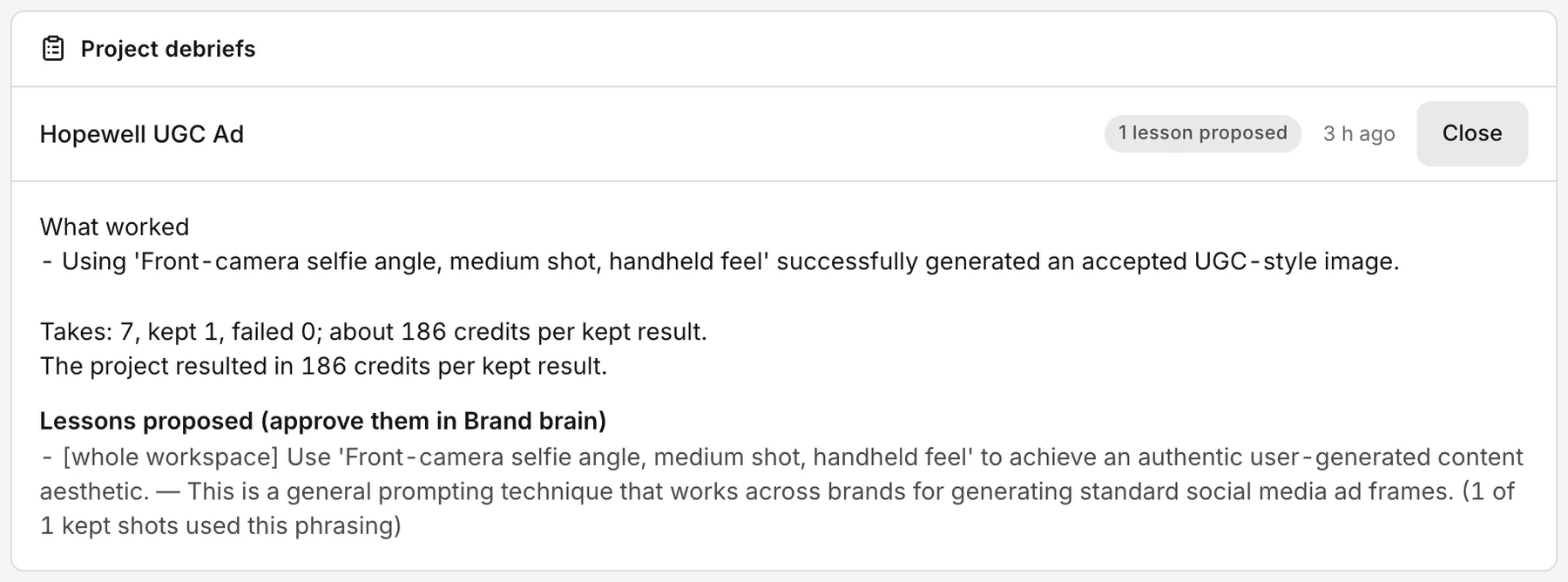
Each file keeps how it was made. Open it and run it again.
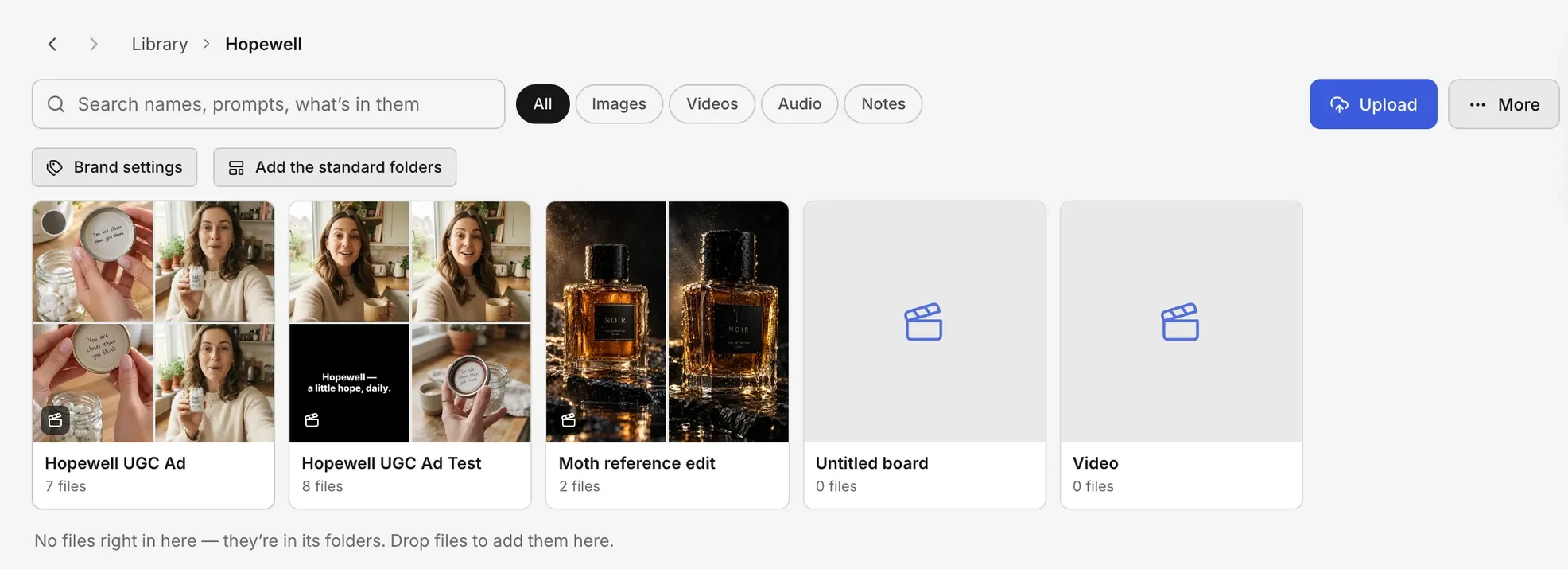
One memory for the whole team.
A new teammate starts with everything the team approved. Nobody re-teaches the brand. Each person’s chats stay their own.
Request an inviteThe team helper
The agent sees the page you’re on, the project that’s open and the files you picked. Ask in plain words. It finds, opens, files and briefs for you.
Anything you can do in PactBoost, you can ask for.
Then it says what it did, with the files to open.
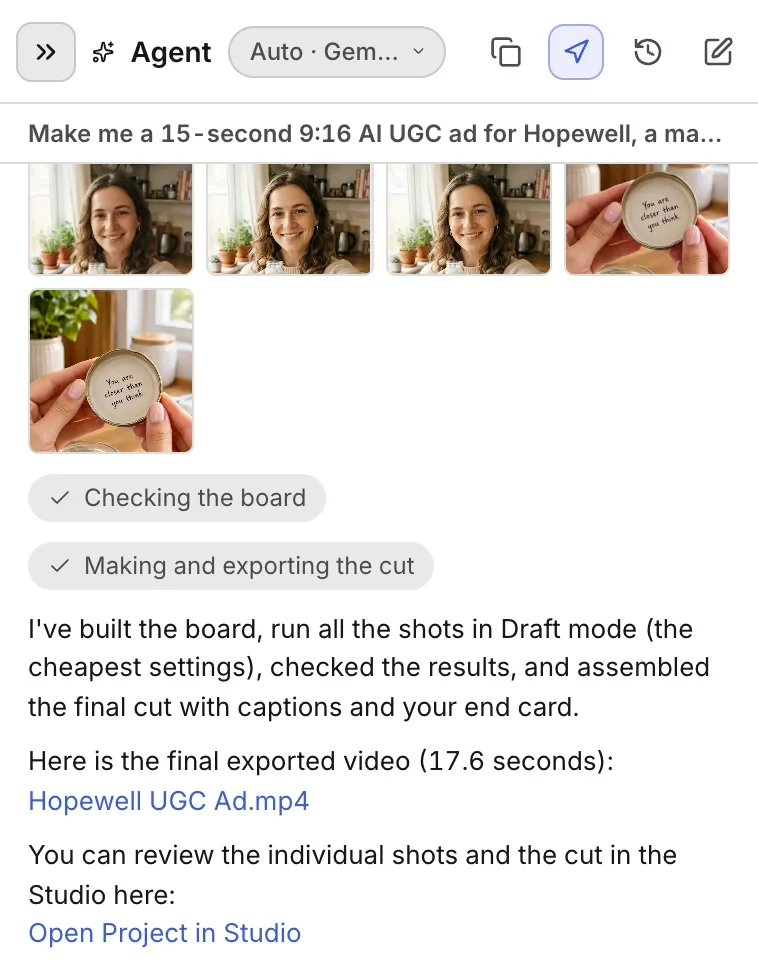
One question, the answers ready to click.
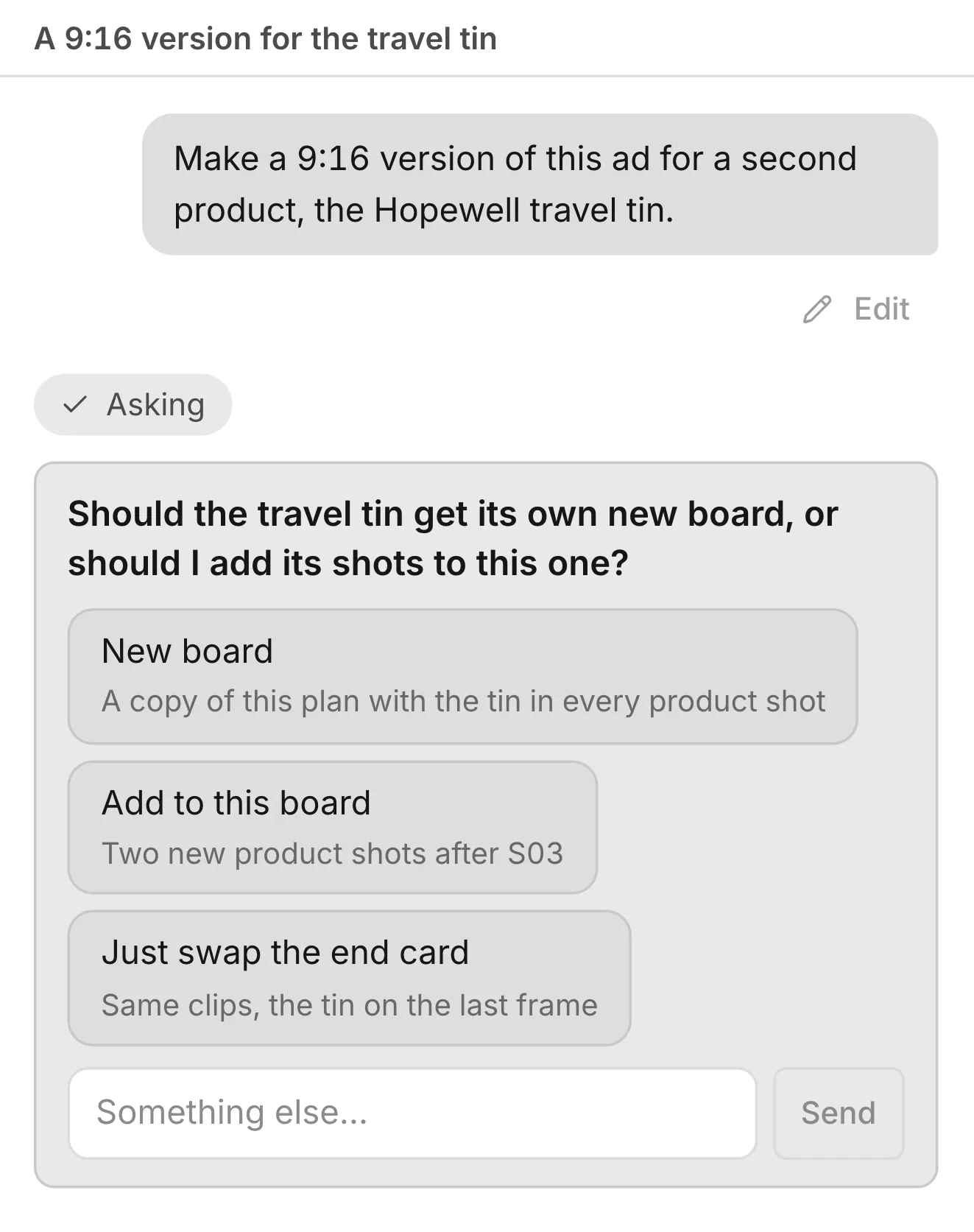
Pick any model in the app, or use your own Claude. The same brand, rules and Go cards.
Control
Every shot and its price, on one card.
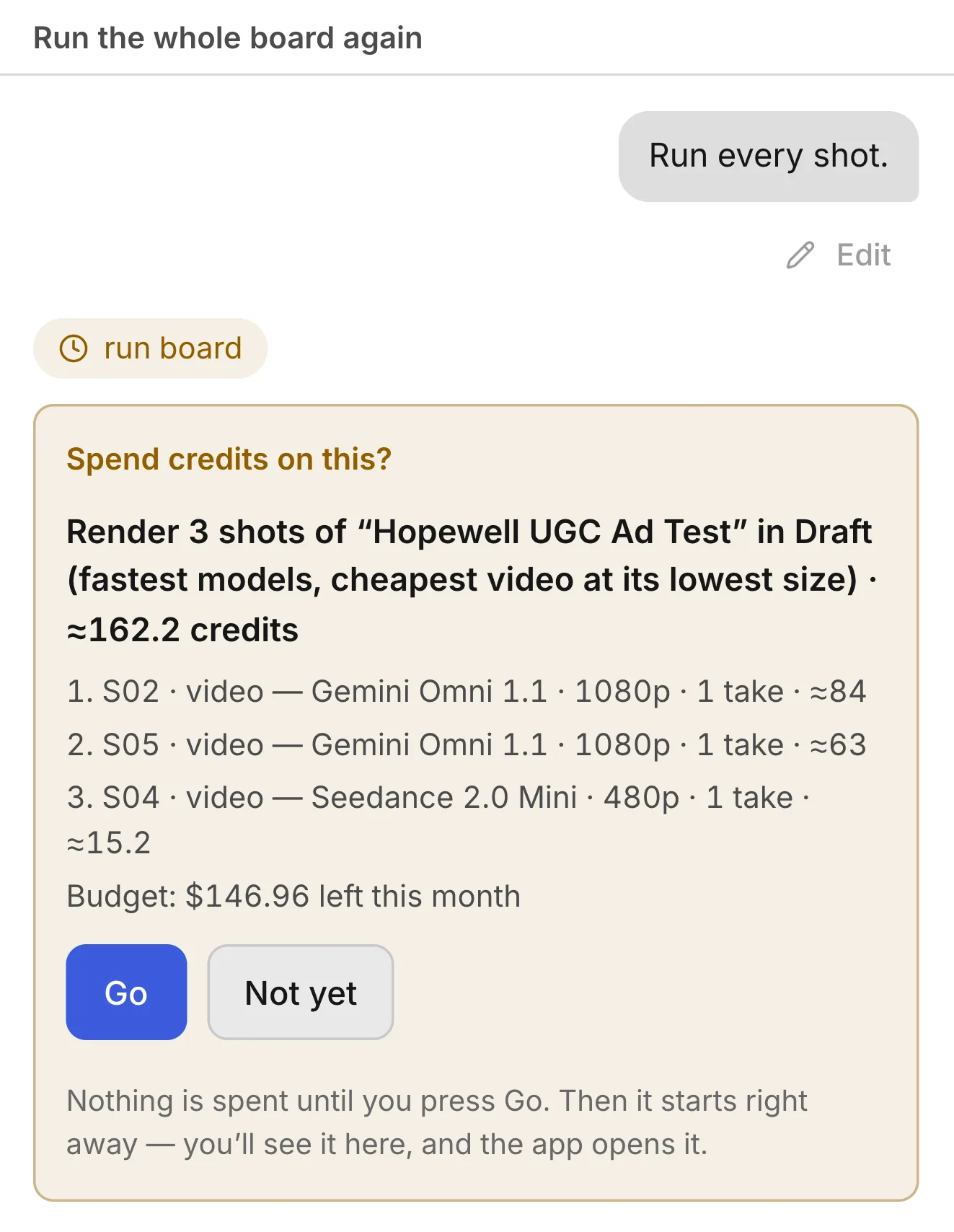
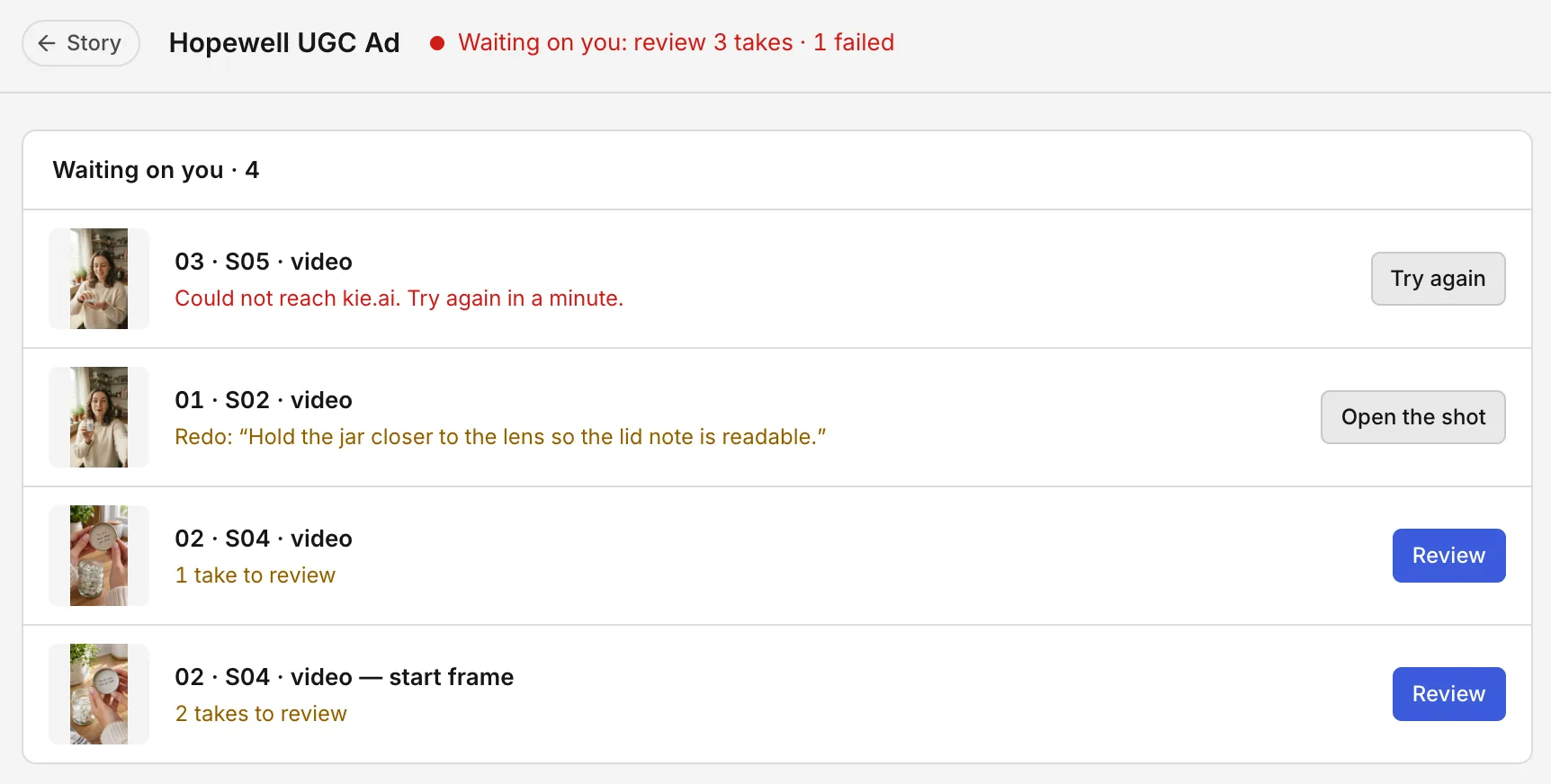
Takes to review, a failed shot, a note to answer.
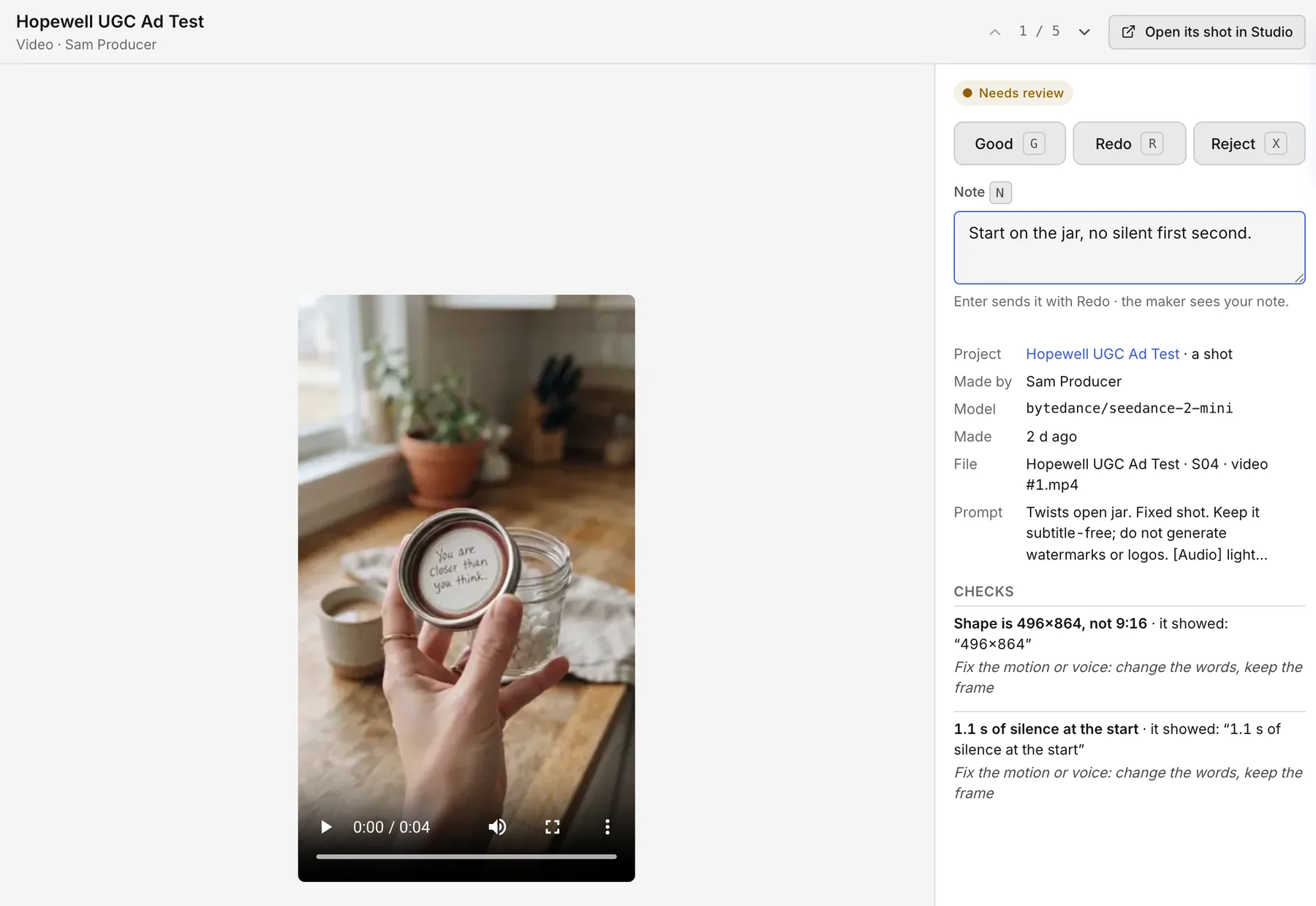
A Redo note rides the shot’s next take.
Set it monthly. Every paid call stops at it.
Cost
$59 a month
for the workspace.
You connect your own provider. Each generation is billed by them, at their price. Every Go card shows it first.
Works inside Claude too. Connect it once.
3 people and 25 GB included. +$10 a month for each extra person. +50 GB for $10 a month. The agent’s own thinking runs on the same provider key.
We’re not always the cheapest per generation. A big annual credit plan can beat a provider’s list price. What you get instead is no credits bought from us, no monthly allowance to use up, and no markup on any generation.
| Same model, same settings | PactBoost | Higgsfield | Magnific |
|---|---|---|---|
| Nano Banana Pro · image, 1K–2K | $0.09 | $0.077 – $0.15 | €0.039 – €0.056 |
| Seedance 2.0 Fast · 720p, 5 s | $0.62 | $0.46 – $0.90 | €0.62 – €0.88 |
| Kling 3.0 · 720p, 5 s, no audio | $0.35 | $0.27 – $0.53 | €0.18 – €0.26 |
| How you pay | The provider’s price per generation, plus $59 a month for the workspace | A monthly credit plan, from $9 | A credit plan, from €10.50 a month on annual billing |
| The price of a generation is | The provider’s own published price | Credits × credit cost, shown as approximate | Credits × credit cost, which they say can change at any time |
| The agent | Drives the whole workspace: boards, shots, checks, cuts, files, review | Supercomputer, a chat agent that plans and generates | Magnific Agents, built inside Spaces |
Published prices read on 5 Oct 2026 from Higgsfield, Magnific and kie.ai (the provider key PactBoost workspaces use today). Higgsfield and kie.ai in US dollars; Magnific in euros as published, not converted. Each range runs from the company’s annual plan to its monthly or entry plan; larger plans cost less per credit. Prices and promotions change, so check their pages. Product names are used for identification only, with no affiliation.
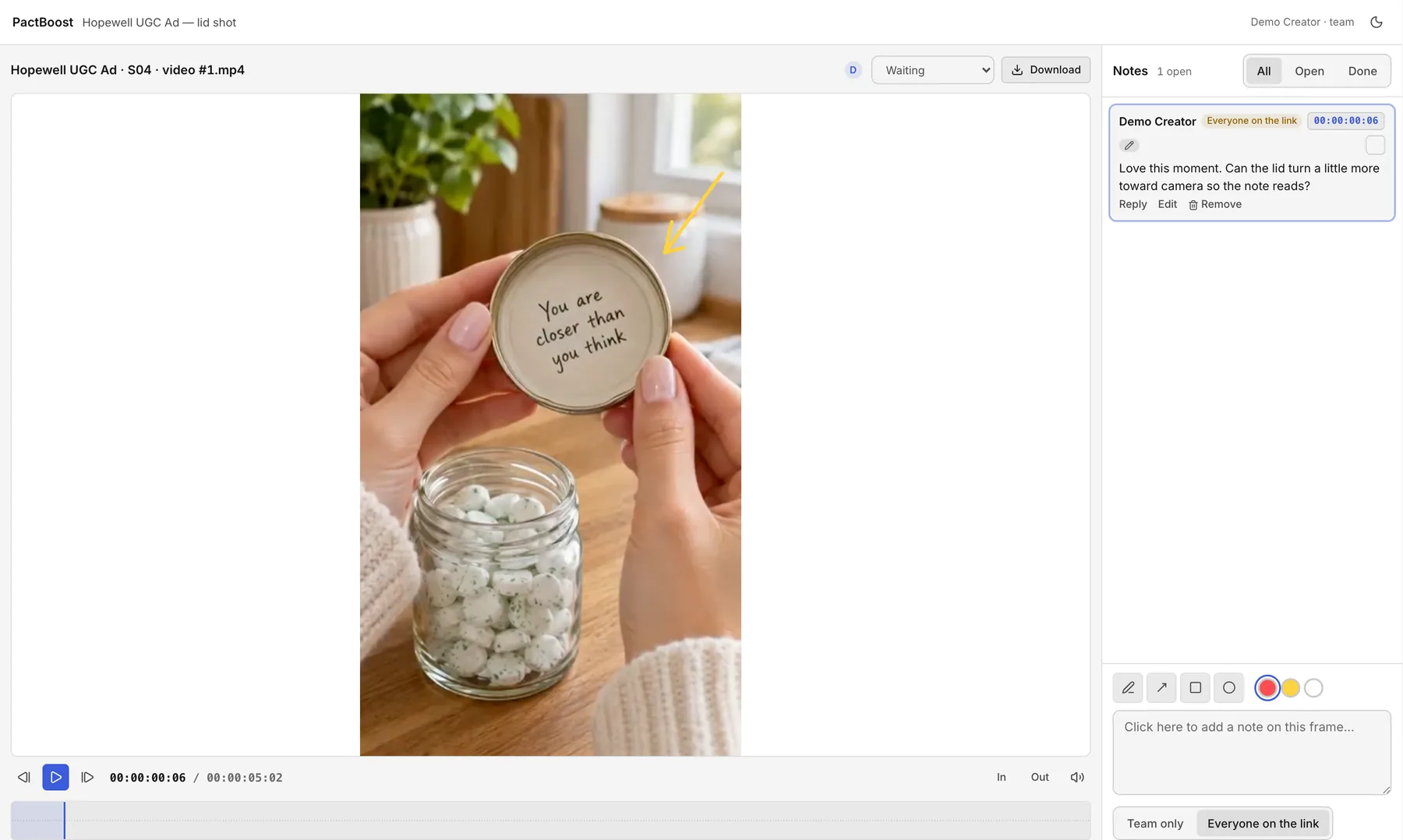
Four questions and a link to your work. If it’s a fit, your invite comes by email.
Question 1 of 4
Made by a team of creators and a team of engineers.